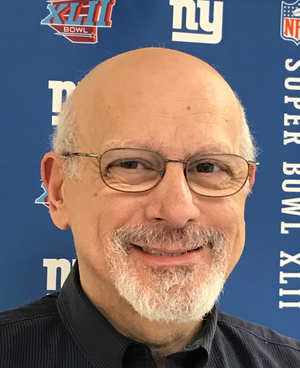
The Mercuro Event Industry Interview Series: Intel Program Manager Victor Torregroza
Recently I had the privilege to interview Intel Corporation’s Events & Experiences Program Manager, Victor M. Torregroza. Victor is responsible for the strategic definition and implementation of some of Intel’s most dynamic corporate event and trade show experiences. He is a passionate pioneer of experiential marketing, delivering events as memorable moments of purposeful customer engagement and has managed many of Intel’s award-winning trade show programs, including the Consumer Electronics Show (CES) and AWS re:Invent.
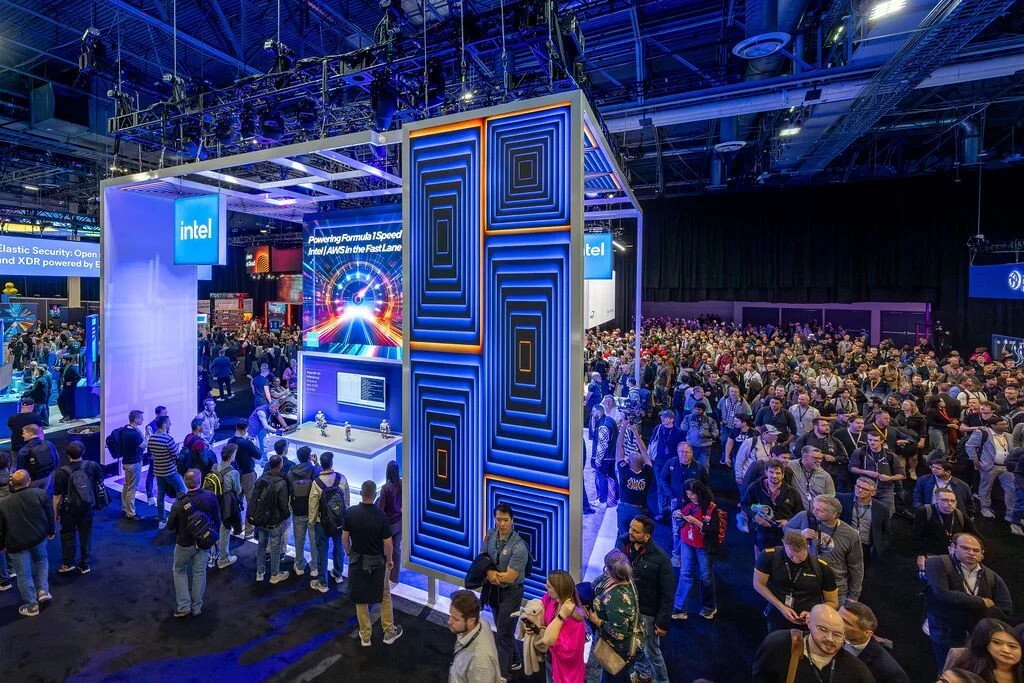
After the pandemic, Victor led Intel’s transition from Intel’s industry-recognized experiences on the show floor, to a customer-focused, invitation-only experience off the floor. He sees show organizers as collaborators and exhibit agencies as artisans and producers, complimenting a nimble team. In addition to trade shows, Victor manages product launches, industry events, and special events such as the World Economic Forum. As the tech industry is in a constant state of evolution; he attends various events outside of the tech sector for fresh perspectives.
Victor’s first job was at his local chain steakhouse, where he learned the vital intricacies of teamwork and sincere customer service. Later in years, in the hospitality industry, he learned the concept of Mise en Place – everything in its place. His mantra, "We eat with our eyes," carries more weight as we engage audiences via sensory experiences. A recipient of multiple industry awards, Victor believes in delivering events as valuable moments of engagement that support the business and reach people on a heartfelt level.
AM:
When you’re working with an exhibit house partner, what are the top qualities or behaviors you look for beyond creative design?
VMT:
Swift responsiveness, a nimble team that has global expertise, & a global point of view of the local business and cultures. No layers of bureaucracy. An agency that understands our brand, budgets, customers, and trends.
Tech is evolving at a rapid pace; we need our exhibit agencies to respond swiftly, be aware of current trends and best practices.
Boutique, premium customer services & solutions with a global perspective & team.
AM:
From your experience, what makes an RFP truly effective, and what common mistakes do exhibitors make that lead to misalignment, unnecessary cost, or missed expectations?
VMT:
An effective RFP includes the strategic framework, KPIs, desired results, and a single key takeaway.
The strategic framework is the foundation of any event; it’s essential to an RFP that will deliver impactful results. No matter the size of the event, the strategic framework is the blueprint upon which the creative experiences will be produced.
The decision matrix is also important to an effective RFP. You have a recommender, activator, and ONE decider.
Last, but not least – TIME! I believe an effective RFP gives the participating agencies at least 8 -10 weeks to respond to the RFP. We, as exhibitors, must allow our creative agencies time to provide well thought out ideas, experiences, budgets.
AM:
How do you personally define “success” for a trade show, and how has that definition evolved over time at a company like Intel?
VMT:
Survey results, measurement data, dashboards: Irrefutable logic that defines how the event performed to the KPIs.
We’ve always measured shows & events. KPIs are defined during the strategic framework phase. We measure brand, product preference, perception, NPS, quality of engagement, value of staff experience, and more.
It’s evolved to include measuring the quality of the information received, and value to their business.
“Was the quality of your engagement with Intel valuable? Was the information received valuable to your business priorities?”
Feelings are not facts. The measurement data is used to inform the next year’s event strategy, budget, priority areas.
I have fond memories of working as a waiter for many years before and during college. Remember those paper surveys you’d have the option of completing after your restaurant meal? It was instant feedback. Today the survey process is much more advanced - we’re equipped with constant feedback, areas of improvement and specific comments.
Call me crazy, I envision the trade show booth/event experience equivalent to the experience of dining out, having a simply wonderful experience that delights your heart and soul. One that you’d return to and share positive posts (NPS) with your friends/community.
AM:
With rising costs across space, labor, services, and logistics, how should exhibitors rethink how they prioritize spending and manage expectations internally?
VMT:
The budget must support the strategic framework for the event or show. The program must be funded properly – do it right, or don’t do it at all. There is no in between.
You show up to best represent your brand to engage key audiences. Invest where your key audiences are going to have the most impactful experience with your brand and products.
Remove elements that don’t support the customer engagement experience. Pay attention to the essential elements required to deliver on the success metrics for the show. Sometimes, less is more.
AM:
From your perspective on the show floor, what are the biggest missed opportunities exhibitors still make when it comes to booth experience and attendee engagement?
VMT:
Eyes. Engagement. Emotion. Edit.
Eyes: Put yourself in the attendee’s shoes. What is going to stand out and attract that attendee to your experience?
Flip the phone camera. What’s the breakthrough creative that will compel attendees to approach your activation in 3 seconds or less?
Engagement: Once they’ve stepped into your booth (restaurant), what’s the experience they will have?
Have you trained your staff to provide quality services? To successfully satisfy their business needs.
Having grown up in a strict Catholic family, our parents taught us about etiquette, manners, and respect. Is your staff trained on the basic etiquette required to sincerely engage, listen, qualify, and thoughtfully respond to the attendee’s questions?
Today, that rectangular illuminated glass sometimes takes priority over the attendee having a valuable experience with your brand. Put those away.
Emotion: After their business experience, what’s the one key takeaway you want them to feel? To recall on that flight home and back at the office? To share with their colleagues?
Edit: Too often, we want to fill the booth space with too many demos or experiences.
Practice restraint. EDIT the experience. Step back, look at the space. Empty spots allow for more human engagement.
Restaurant expeditors ensure the food is plated properly, garnished perfectly, and delivered to the guest swiftly. I also worked as a restaurant expeditor – I loved it! Mise en Place! Think about trade show experience design in that mindset.
AM:
What internal challenges do exhibitors tend to underestimate, such as timelines, stakeholder alignment, or cross-team communication, when planning major trade show programs?
VMT:
TIME!
My mother was hours late for her wedding, and I’m so grateful my father waited for her.
On-point creative solutions don’t happen overnight. Give your agencies time to respond to the creative or project brief. I like the 9-month timeline: Publish the brief 6 to 9 months before the show, work back from there. Too often we don’t allow our agency partners enough time to respond to the brief. Often, it’s, “I need it yesterday”.
As far as cross-team communication, it’s important to concisely communicate essential elements of the trade show or event status in short steady cadences. This can be a bi-weekly or monthly short email providing updates across the program. Everyone is so busy; a simple concise news bulletin update helps to keep teams informed across the org.
AM:
If you could give one piece of advice to exhibitors making significant trade show investments today, what would it be, and why?
VMT:
I have 3 pieces of advice on this subject. Why? Because customer service matters more than ever, across all segments of business. Because people recall great customer services. People become loyal to that business if they continue to experience exceptional customer service.
1. Invest in Training for the Best Booth/Event Staff. Invest in training your exhibit staff. Just like in retail, restaurants, the airlines – we all want excellent customer service. We want answers, we crave expertise, opinions, insights, conversation. Training your staff to listen to attendees, qualify attendees, asking them what brings them to the show, what solutions are they looking for. Train your staff to LISTEN. Train your staff to be in the moment on the show floor. Put away the illuminated rectangular glass; be in the trade show moment. Qualify, listen, maintain eye contact, cross sell.
This training can be completed internally with your PR, social media, and events team of experts.
2. Utilize the whole volume of your space. The show floor is competitive. How you stand out to attract is important. This applies to an 8’ x 10’ or larger exhibit; it doesn’t matter how large or small. Too often, exhibitors don’t fully utilize the volume of space to engage from afar, and delight in the booth.
3. Create Content Capsules. Trade shows are 3, 4 sometimes 5 days. This is a great opportunity to curate experiences over those show days, giving attendees options to return for unique moments.
Get creative with personal experiences, live performances, customer presentations. These capsules don’t have to be expensive. They can be culturally relevant, local, cost effective. I especially love the musical capsule. Remember all the string musicians at this year’s Super Bowl? It was so beautiful!
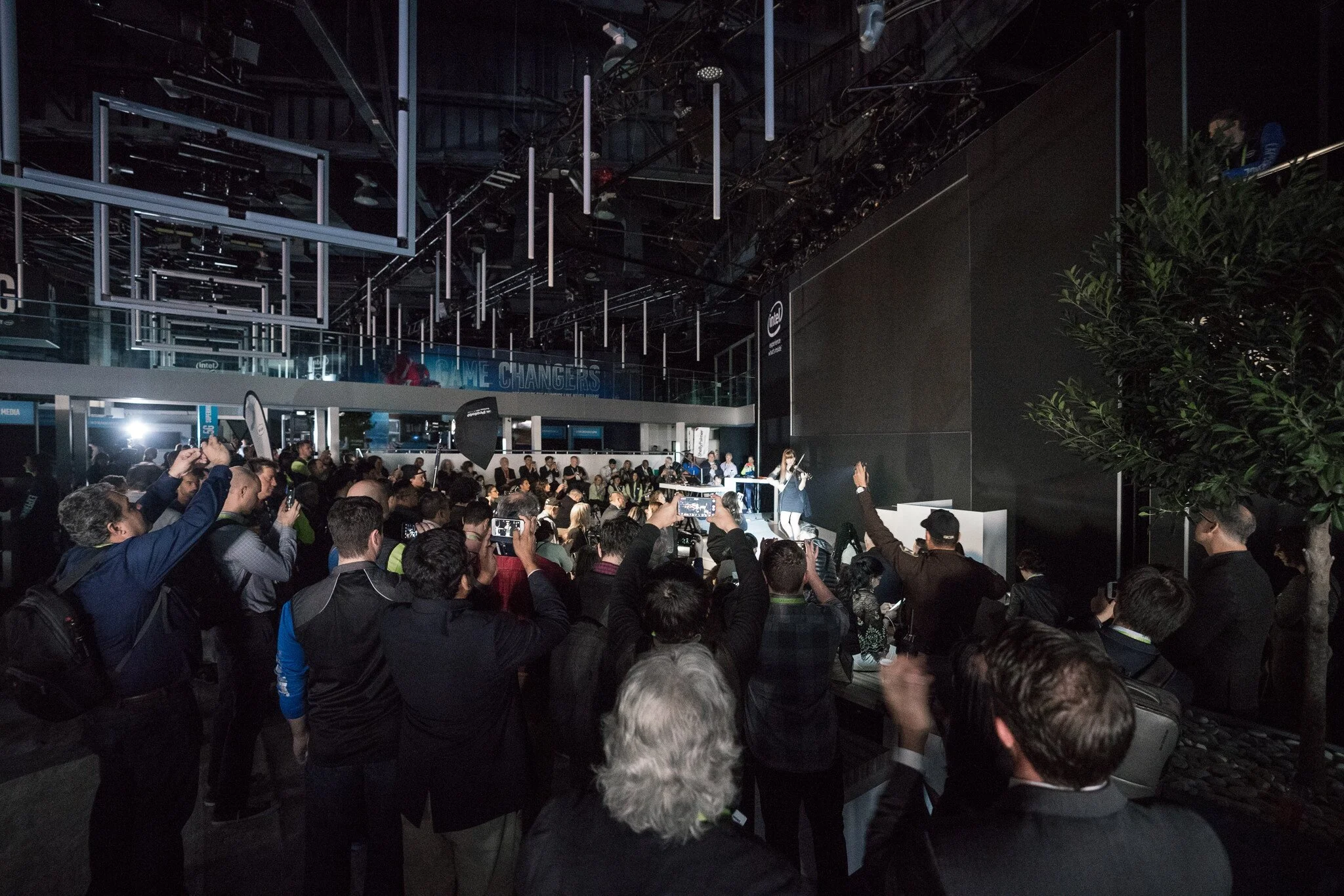
We’ve worked with musicians at several shows. One of my favorite memories was the blackout at CES 2018. So much rainfall created a temporary blackout in the central halls of the Las Vegas Convention Center. We worked with musician, @Häana to curate tech-infused live performances tied to our compute technology. The power went out just as she was to begin her performance. All the seats were full. “What should I do?”, she said. The stage manager replied, “The show must go on, Haana!!” She performed; people lit her up with their phones. You could hear her violin calmly pierce through the eerily quiet convention center. We were filming that performance. It was simply electric! Many brands put out social posts about the CES 2018 blackout. Intel’s post was: The Human spirit never loses its power.