The Mercuro Event Industry Interview Series: David Adler on Why the Room Still Works
The founder of BizBash on goosebumps, the tummler, and the gathering instinct that no screen has managed to kill.
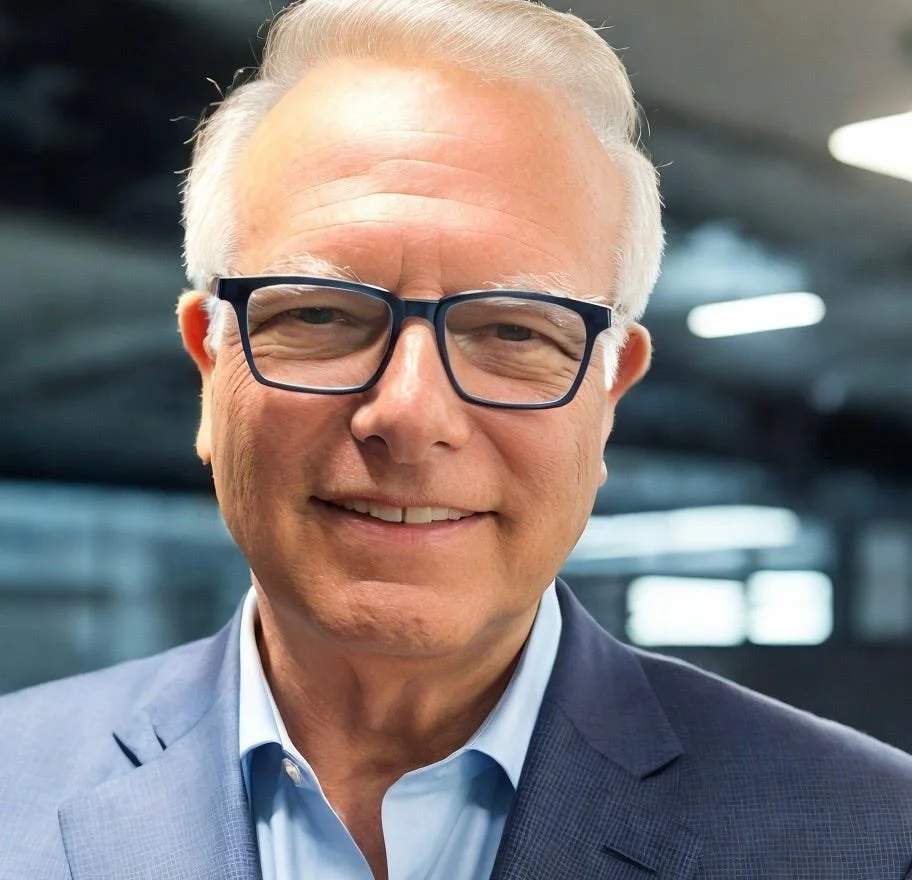
David Adler has spent the better part of four decades studying the room. Not the lighting plot, not the catering pass order, not the floor plan, but the room itself as a living social system: who gravitates toward whom, when the energy shifts, what makes a stranger become a collaborator before the second drink is finished. He founded BizBash, sold it to Tarsus, which sold it to Informa, and kept going, building GatheringPoint.news and GatheringArchitecture.com as the intellectual infrastructure for a profession he has spent his career arguing is more consequential than it gives itself credit for. His book, Harnessing Serendipity, is both a practical framework and a philosophical wager: that the collisions which change careers, companies, and lives are not accidents, and that the people who design the rooms where those collisions occur are practicing one of the most important arts in modern business. I sat down recently to talk about why “live gathering” still matters, what artificial intelligence cannot replace, and what the next generation of event professionals needs to hear about the work they are doing.
AM:
You've spent decades observing how people gather, connect, and do business. Why do you believe live gathering still matters so deeply?
DA:
Here is something the industry almost never says out loud: not everyone actually wants to connect. Some people do not know how. Some need explicit permission before they will extend a hand. Some are terrified, the way I was terrified at my first cocktail party in Washington when I was twenty-one, a kid who had just launched a society magazine called Washington Dossier and hired his own mother as editor, standing in a room full of people who seemed to know exactly what they were doing while I was trying to remember how to say my own name. I put out my hand the first time and it was awful. The second time was easier. By the third time I understood something that nobody had told me: gathering is a skill, not a personality trait. You practice it the way you practice riding a bicycle. Once you get it, you never want to stop.
That is why the facilitator has become the most important and most undervalued role in the events industry. The best facilitators lower the cognitive load of being in a room with strangers. They give people permission. They create the conditions where someone who would never walk up to an unknown face suddenly finds themselves in the middle of a conversation that changes their week, their year, their career. Go back as far as human history allows and the story is the same: the agora in Athens, the medieval market square, the salon in eighteenth-century Paris, the convention floor in Las Vegas last Tuesday. The room has always worked. The question is who is running it well enough to make it work for the people who do not yet know they need it.
The proof that this instinct runs deeper than business arrived on September 12, 2001. Business events stopped almost immediately. The commercial calendar went quiet. But personal gatherings surged, and not just the informal kind. In the weeks after the attacks I published a guide to grief practices, because what I was watching happen around me was a society reaching instinctively for ritual, for the structured forms of being together that give shape to experiences that would otherwise be unbearable. People showed up at each other's houses. Neighborhoods that had been politely indifferent to themselves became communities overnight. Strangers found each other in bars and parks and church basements because standing together was the only thing that made any sense.
What that moment also revealed, and what the industry has never fully absorbed, is that rituals both connect people and frighten them. A ritual you do not recognize can feel like a wall rather than a door. The grief guide I published was partly about that: how do you grieve with people whose practices are different from yours, how do you find the shared ground without requiring everyone to abandon what they already know. That question turns out to be the same question every event organizer faces every time they design a room. We need to know each other's rituals. Not as a cultural nicety but as an operational prerequisite. The organizer who understands what binds the community before the community walks in the door is the one who can create the conditions for something real to happen.
AM:
At a time when so much communication is digital, what fundamental human needs do face-to-face events satisfy that technology still cannot fully replace?
DA:
We are in the goosebump business. And there is no app for that, but there is a science, and the science is worth understanding rather than just invoking. When you are physically present with other people in a shared experience, your brain releases oxytocin, the neurochemical that produces trust, bonding, and the sensation of belonging to something larger than yourself. It is the same chemical that fires between a mother and a newborn. It requires physical proximity to trigger at full strength. A screen attenuates it. A video grid of forty faces in boxes suppresses it almost entirely. Dopamine, the chemical of reward and anticipation, also behaves differently in a live room: the unpredictability of a live moment, the not-knowing-what-comes-next that a recorded or scripted experience cannot replicate, keeps the dopamine system firing in a way that a produced webinar simply does not. This is not philosophy. It is neuroscience, and it explains why people leave certain rooms feeling different from how they arrived in ways that no amount of screen time replicates.
The goosebump is the proof of concept. It is an involuntary physiological response, the body registering something as real and significant before the conscious mind has processed it. You cannot produce a goosebump through a screen. You can move someone, inform someone, even inspire someone through a screen. But the full-body recognition of a shared moment, two hundred people feeling the same thing at the same instant and knowing they are all feeling it, that requires presence. Technology is sometimes a crutch we reach for because designing a room that produces goosebumps is genuinely hard, not because the screen is actually better at the job. It is not. No platform has reverse-engineered the chemistry of a live room yet, and the day one does, I will revise my answer.
AM:
Your book is about harnessing serendipity. What does designed serendipity really mean, and how can event organizers create conditions where meaningful collisions are more likely to happen?
DA:
The title is an oxymoron, and I know it. You cannot harness something that by definition cannot be controlled. But here is what you can do: you can make it structurally more likely. The fact that something is an event at all is itself a form of harnessing serendipity. You have taken people out of their routines, put them in an unfamiliar room, and created the conditions where the unexpected is now possible. C2 Montreal understands this at a level most conferences do not. The best events build serendipity into the architecture rather than leaving it to chance and calling that spontaneity.
The formula is proximity plus context plus permission. Proximity puts people in the same room. Context makes those people relevant to each other. Permission is the piece almost everyone underinvests in, and it is the piece that determines whether the first two produce anything at all. We are not trained to be social the way we once were. The muscles have atrophied. So the organizer's job is to design the permission structure: signal that talking to strangers is not just acceptable but the whole point, build transitions between sessions that are designed rather than abandoned, give people something to react to together rather than a badge to scan.
The next frontier in this space is what I would call tribal personalization, and I think it is going to be the defining design move of the next decade. The word tribal is intentional. Humans do not connect as individuals first. We connect as members of groups, as people who share a taste, a belief, a practice, a way of being in the world. The event that figures out how to surface those tribal identities before the room convenes, and then uses them to engineer the first conversation, is the event that produces the connections nobody saw coming. My brilliant colleague Nicole Peck did something years ago that I have never stopped thinking about. When attendees RSVP'd for her event, they were asked one question: are you salty or sweet? Based on the answer, they entered through separate entrances and were greeted with customized hors d'oeuvres. What happened next was the part nobody fully predicted. The salty people found each other. The sweet people found each other. Then the two groups found each other, because now they had something specific and personal and slightly absurd to talk about, which is exactly the kind of social permission that turns strangers into a room rather than a crowd. The connections that came out of that single design decision were connections no organizer could have anticipated or engineered in advance. That is tribal personalization at its most elegant: use a simple, revealing piece of self-knowledge to surface the tribe, then let the tribe do the serendipity work.
AM:
What separates a gathering people remember for years from one that simply fills a calendar slot and is forgotten by the next week?
DA:
Ritual. I conducted one of the first interviews with Priya Parker, author of The Art of Gathering, and her central argument confirmed what I had been watching for decades: we rely too heavily on the conventions of gatherings when we should be focused on the people in the room and what specifically they need from each other. The gatherings that stick are the ones that become part of how people mark time, that carry a sense of purpose specific enough to filter every decision made in the room. I go to SISO CEO every year because those are the people I grew up with in this industry, and being in that room is a form of accounting for where everyone has been, who built what, who survived what, who surprised everyone including themselves. I go to Cannes Lions because it is a genuine spectacle, a place where the industry puts on its best clothes and decides, collectively, what it believes about itself for the next twelve months. I host Jeffersonian dinner parties because the format produces depth of connection in a remarkably short window of time, structured conversation around a single question that makes strangers into collaborators before the dessert course arrives. These are not events I attend for the content. I attend them because they are rituals, and rituals are how human beings locate themselves in time and in community.
Fun is also not a four-letter word, and the industry has been weirdly reluctant to say so. The gatherings people remember gave them something they could not have gotten anywhere else, and sometimes that thing is simply joy. Content is cheap now and getting cheaper by the week. What is not cheap is the feeling of being in a room where the right conversation happened, where someone across the table reframed a problem you had been carrying for two years, where the person you met between sessions turned out to be the person who mattered most. The forgettable event fills a schedule. The memorable one does something irreversible to at least some of the people who were in the room.
AM:
You've elevated the role of event professionals beyond logistics. Why do you describe the best organizers as collaboration artists, and what does that say about the future of the profession?
DA:
When I was a kid, my parents used to take me to the Catskills, to the hotels of the Borscht Belt, those sprawling summer resorts in Sullivan County where New York's Jewish families went to escape the city heat and eat brisket and argue about everything and occasionally fall in love. The person who ran the room at those hotels was called the tummler, a Yiddish word that translates roughly as one who makes a racket. The tummler was part social director, part emcee, part therapist, part court jester. His job, as Mel Brooks once described it, was to wake up the Jews when they fell asleep around the pool after lunch. Mel Brooks was a tummler. Danny Kaye was a tummler. The role was considered a stepping stone, a rung on the ladder toward something more serious. What nobody said out loud, but what was obviously true, was that the tummler was the most important person at the hotel. Without him, the room never came alive.
My father, the novelist Warren Adler, understood this so well that he built an entire book around it. Funny Boys, his novel set in the Catskills of the 1930s, follows a young tummler named Mickey Fine who gets hired as social director at a hotel full of Jewish gangsters and discovers that making a room of dangerous men laugh is not entirely different from making any other room of difficult strangers connect. My father wrote fifty novels, including The War of the Roses, but Funny Boys was the one that came from something personal, from the memory of those mountains and those hotels and the man at the center of every gathering whose job was to make sure nobody felt alone.
I have been thinking about the tummler my entire career, even when I did not have the word for what I was thinking about. When I started BizBash in 2000, the goal was to disintermediate the event planner, to make the work visible so that what separated one organizer from another was no longer their rolodex but their talent. Tarsus understood that argument well enough to acquire the company, and Informa understood it well enough to acquire Tarsus. The work was always the asset. The directory was the wrapper. But the deeper argument, the one I have been making ever since, is that the next superstar of the events industry is the tummler by another name: the facilitator, the person who knows how to run a room the way a great teacher knows how to run a classroom, who lowers the cognitive load of being in a space with strangers, who gives people the permission they need to stop being an audience and start being a room. Mel Brooks fell off a diving board in a derby hat to make that happen at Grossinger's. The best event facilitators of the next decade will have their own version of that move. The principle is exactly the same.
AM:
Looking specifically at conferences and trade shows, how should organizers and exhibitors rethink success beyond attendance numbers, booth traffic, and lead counts?
DA:
At the 2024 BizBash Leadership Summit, we did something I had been wanting to do for years: before anyone left the room, we put a Memorandum of Understanding in front of the entire group and had every attendee approve it collectively. The MOU committed the room to specific principles, from prioritizing purposeful attendee engagement to implementing universal measurement standards for ROI, from marketing with integrity to fostering ongoing engagement beyond the event itself. It was dated, signed, and shared. What happened next was different from every summit I had run before. The conversation did not dissolve when people walked out. It had a document attached to it, a named commitment, a set of principles the room had endorsed together, and that created accountability that no badge scan or lead count ever produces.
Now I would go further. If I ran that summit today, I would record and analyze the entire event, capture every conversation, every session, every hallway exchange, and use AI to synthesize what the room actually said into insights and action items before the closing dinner. The MOU was a start. The full analysis of what a room of industry leaders said, thought, debated, and agreed on is the thing that turns a gathering into a body of work. The lead count is a proxy for something nobody is actually tracking: whether the event changed the trajectory of any of the businesses or careers that passed through it. The exhibitors who figure out how to track that will have something the rest of the market does not: proof that the room actually worked.
AM:
As artificial intelligence becomes more present in business, what parts of event planning should become more efficient, and what parts of the live experience must remain unmistakably human?
DA:
The efficiency argument is not complicated, and the industry should stop being nervous about it. We went from hand-lettered invitations to printed ones, from printed ones to email, and each transition freed up time and money that the best organizers reinvested in the experience itself rather than mourning the craft that was lost. AI is the same evolution at a larger scale. Let it handle the logistics, the scheduling, the data synthesis, the registration workflows. The organizers who resist that are making the same argument the calligraphers made about the printing press. They were not wrong that something beautiful was lost. They were wrong that holding onto it was the right response.
But the efficiency argument is the least interesting thing AI can do for the events industry. The more important distinction is between using AI for learning and using it to replace experience. I have been using AI to analyze conference agendas, and what it surfaces is clarifying and sometimes uncomfortable. You can see very quickly which speakers earned their place on the program and which ones bought it. You can see where the editorial independence of a conference ends and the sponsorship influence begins. You can see the gap between what an event claims to be and what its agenda actually reveals. I have been writing about this on GatheringPoint because the industry needs to have an honest conversation about what pay-for-play does to the credibility of the room. The veracity premium that smart investors are currently paying serious multiples for depends entirely on the room being real. An agenda built around who wrote the check rather than who has something worth saying is not producing veracity. It is producing a more expensive version of the digital fake, and AI makes that visible in ways that were previously too labor-intensive to surface at scale.
The second thing AI can do that nothing else has managed is capture the collective intelligence of a room in real time and turn it into something actionable before people leave the building. Imagine a gathering where everything said across every session and every conversation is being listened to, synthesized, and distilled into insights and next steps as the event unfolds. Not a note-taker writing up a summary three days later. An intelligence that detects the patterns in what a thousand people are saying, surfaces the ideas that keep recurring across different rooms, and converts the brilliance of the gathering into progress before the closing dinner. The experience that produces those conversations must remain unmistakably human. The system that captures and amplifies what they contain does not need to be.
AM:
You've watched the industry navigate major disruptions, from 9/11 to COVID and beyond. What have crises taught us about the role events play in rebuilding confidence, trust, and community?
DA:
After September 11, I watched something specific happen that I have not seen described accurately anywhere in the years since. The business events stopped, as everyone knows. But what replaced them was not silence. As I had mentioned earlier, it was a particular kind of gathering that had no agenda and no sponsor and no registration fee: people sitting together, in living rooms and community halls and houses of worship and places they had never been before, performing the rituals of grief and solidarity that human beings have been performing since before recorded history. I published a guide to grief practices in those weeks because the question I kept getting was not about events. It was about how to be with other people in a moment that had no precedent in most of our lifetimes. The rituals were the technology. The gathering was the infrastructure.
What every major crisis has confirmed, from September 11 to the financial collapse of 2008 to COVID, is that the moment a community is ready to believe in itself again, it does not send a memo. It gathers. Not online. Not in a webinar. It gathers in a room, with people who share the same wound and the same uncertainty, and the act of being physically present together is the signal that recovery has begun. The events industry is the infrastructure of confidence, and the people who build that infrastructure are performing a function that no other sector of the economy performs and no digital platform has yet replaced.
AM:
When you look ahead to the next decade, do you see trade shows becoming marketplaces, media platforms, communities, or something entirely different?
DA:
All of the above, and the mistake is to pick one before your audience tells you which one they actually need. The most sophisticated trade shows of the next decade will understand that they are competing with media platforms, year-round digital communities, and AI-powered matchmaking tools that can connect buyers and sellers without anyone buying a plane ticket. The response to that competition is not to become those things. It is to do with radical excellence the one thing those things cannot do: produce the experience of being in a room when something real happened. The shows that survive and grow will be the ones that make that experience unmistakably worth the trip, that send people home with something they could not have gotten from a screen, and that have the metrics to prove it.
AM:
You've spent your career elevating the importance of gatherings. If you could leave one message for the next generation of event professionals about why their work matters, what would it be?
DA:
That the room you design is not the background to the story. It is where the story happens. Every gathering you produce has the potential to be the moment when two people who needed to find each other finally did, when an idea that had been circling in someone's head for a year found the room to land, when a community that had scattered and gone quiet remembered why it existed. You are not filling calendars. You are building the architecture of human connection, and in a world increasingly mediated by screens and algorithms and artificial intelligence, the ability to design a room where real goosebumps happen to real people is one of the most important skills in the economy. The tummlers knew it. The great teachers know it. The best event professionals of the next decade will know it too. Treat the work that way. The profession will follow.
Many thanks to David Adler for taking the time to offer his hard earned wisdom. It was truly a pleasure. We look forward to speaking with him again in the future.
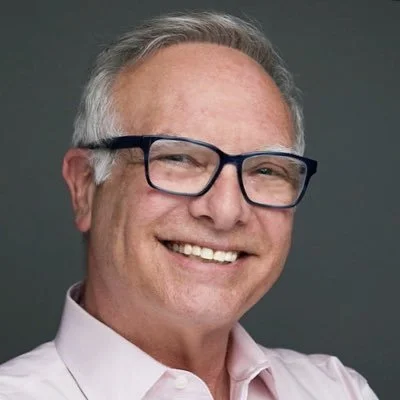
David Adler is the founder of BizBash, which he sold to Tarsus, which sold it to Informa. He is Curator in Chief of GatheringPoint.news and the author of Harnessing Serendipity. He is building GatheringArchitecture.com as a strategic resource for event practitioners. You can learn more about David and connect on LinkedIn.
Stay-tuned for more expert commentary on exciting and ever evolving event industry topics by bookmarking this interview series and following me on LinkedIn and X. Feel free to message me with subject matter ideas and interviewee suggestions you would like included in future posts and video interviews.
Need assistance with your trade show marketing program?